The Heartbeat of the City: Embracing the Unseen Dance of Urban Time

The city does not ask for your attention. Instead, it demands your presence not through grand events or iconic landmarks, but in the subtle interplay of light, architecture, and the flow of people. It is in these quiet moments, where nothing dramatic happens but everything feels charged with possibility, that the true rhythm of urban life reveals itself.
The Rhythm of Concrete and Shadow
Concrete structures rise in repetitive patterns, like a silent beat in the city's soundtrack. Take a parking garage, for example. Its stacked lines and shadows create a rhythm that feels orderly, almost predictable. Yet, this order is never complete. A soft breeze, a shifting light, or a passerby blurs the edges of certainty. The city resists full control, reminding us that beneath its rigid design lies constant movement and change.
This tension between structure and unpredictability invites us to pause and observe. It is not about what happens, but what almost happens the moments just before movement, the spaces between actions.

Figures in Transition
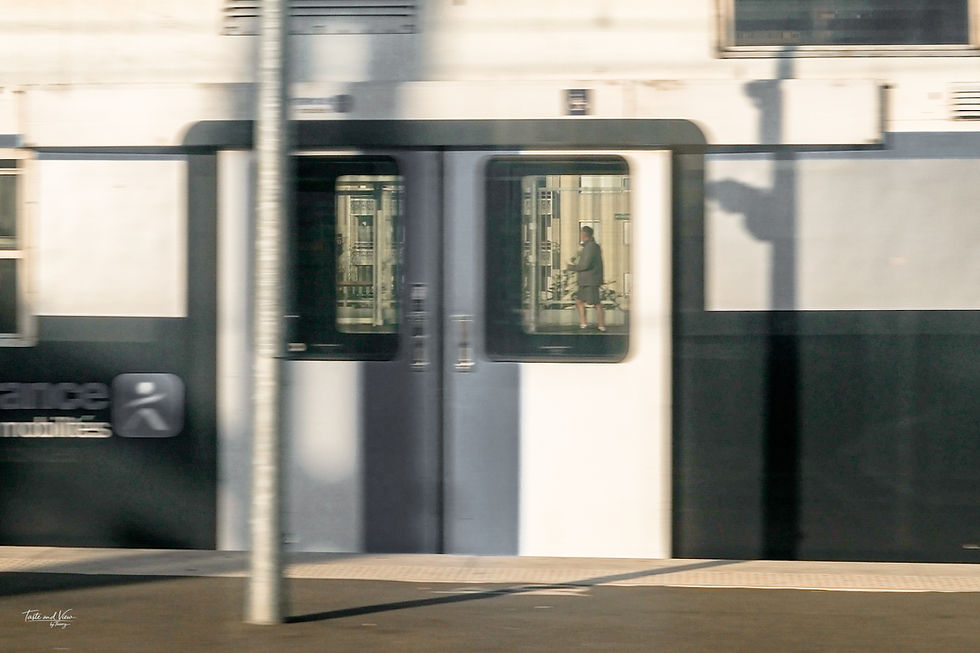
In the midst of this urban rhythm, a figure appears not as a hero or focal point, but as a quiet participant. Imagine a man standing at the edge of movement, caught between stillness and motion. Seen through a frame within a frame, he becomes both observer and subject, embodying the city's constant negotiation between presence and passage.
This moment captures the essence of urban life: people are rarely the center of the city’s attention, yet their presence shapes the space around them. The city does not pause for anyone, and no one asks it to. Instead, life unfolds in layers of interaction and observation.
Reflections and Overlapping Stories
Glass surfaces multiply reflections, compressing distance and blending separate lives into a mosaic of fleeting connections. Strangers become overlapping stories, sharing the same moment without ever truly meeting. This complexity is where the city reveals its character not in clear narratives, but in fragments that hint at deeper, unseen ties.
These reflections remind us that urban life is not linear. It is a collage of experiences, each layer adding depth and texture to the whole.
A Doorway to New Perspectives
Further along, a doorway opens not just as an exit, but as a frame that reshapes how we see the street beyond. The outside world becomes distant, almost curated. Cyclists pass by like quick thoughts, uninterrupted and unbothered. Life continues, indifferent to whether we watch or not.
This moment invites us to consider how urban spaces guide our perception. Doorways, windows, and frames act as filters, shaping what we notice and how we relate to the city around us.

Color and Quiet Intent
Color interrupts the urban palette with a mural stretching boldly across a wall. Its loud presence contrasts with a cyclist moving quietly nearby. One is fixed and permanent, the other fleeting and purposeful. Both belong to the same story, yet they never touch.
This contrast lingers, inviting reflection on how permanence and transience coexist in cities. Murals, buildings, and art stand as markers of time, while people and vehicles pass through, carrying the present moment forward.
The City’s Breath by the Water
At the water’s edge, the city seems to exhale. Open space replaces density. Boats rest quietly, and the sky reflects on the surface, slowing time for a brief moment. Yet even here, the skyline holds tension. The city watches itself breathe, never fully letting go.
This pause by the water offers a rare chance to witness the city’s heartbeat in a quieter form. It reminds us that urban life is not just about movement and noise, but also about stillness and reflection.

Finding Stillness Amid Movement
Finally, a man sits quietly, folded into his own moment. Around him, life continues people pass, light shifts, and the city hums with activity. His stillness contrasts with the ongoing flow, highlighting the coexistence of solitude and connection in urban spaces.
This scene captures the heartbeat of the city: a continuous dance between movement and pause, presence and absence, certainty and ambiguity.
Urban life is a complex dance of light, structure, and human presence. It does not demand our attention with spectacle but invites us to witness the subtle negotiations that shape every moment. By embracing these unseen rhythms, we deepen our connection to the city and find meaning in its quiet tensions.
Lets’s View


Comments