
In Doel, silence frames the streets and echoes fill the empty space.
There are places you visit, and there are places that stay with you.
Doel belongs to the second kind.
Hidden along the river Scheldt, just outside Antwerp, this small polder village once lived a quiet, ordinary life. Farmers, families, cafés — a rhythm shaped by land and water. But today, Doel feels suspended in time. Not fully gone, not fully alive. A place caught between memory and future.


 |
|---|
 |
 |
 |
 |
 |
 |
The setting
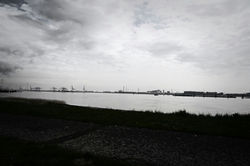
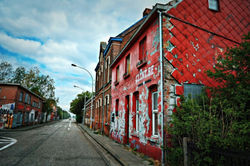
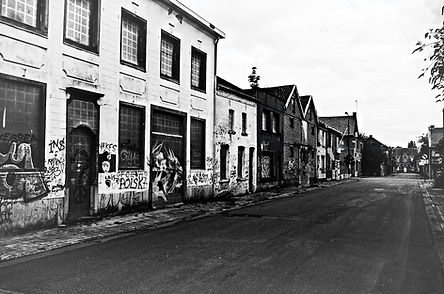
At first glance, Doel feels unreal. Long, empty streets stretch between rows of houses that seem frozen mid-sentence. Windows boarded up, doors sealed, silence everywhere.
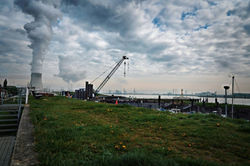
And yet, it’s not silence in the pure sense. There’s wind moving through broken corners, distant industrial noise, and always — in the background — the towering presence of the nuclear cooling towers. A contrast so sharp it becomes part of the identity.
Doel sits literally in the shadow of industry, surrounded by the expanding Port of Antwerp. What was once a peaceful village now feels like an island between past and progress.
.jpg)
.jpg)
 |  |  |
|---|---|---|
 |  |  |
 |
The story
The story of Doel is not just visual — it’s political, emotional, and deeply human.
Since the 1970s, plans to expand the port meant the village had to disappear. Homes were bought, people left, and a slow exodus began. What once counted around 1,400 inhabitants gradually emptied out.
Decades of protests, legal battles, and uncertainty followed. Some residents refused to leave, holding on to their homes, their history, their identity.
For years, Doel lived in limbo — half abandoned, half resisting. Until 2022, when a decision finally confirmed what many hoped for: the village would stay. Not as it was, but not erased either.
 |
|---|
 |
 |
 |
 |
 |
 |
 |
.jpg)
.jpg)
 |  |
|---|---|
 |  |
 |  |
 |  |
 |  |
The atmosphere
Walking through Doel is unlike anything else.
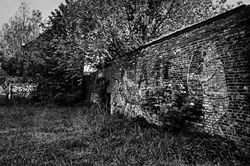
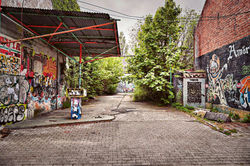
Graffiti has taken over the walls — not randomly, but almost poetically. Layers of color, protest, art and decay blend into something raw and honest. Every street becomes a gallery. Every building, a canvas of time.
But beneath the art, you feel something deeper. Absence.
A school that once closed with only a handful of children left.
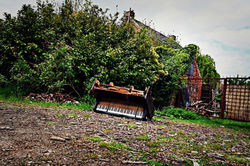
Homes that still carry traces of lives abruptly paused.
It’s not a ghost town.
It’s a memory that refuses to fade.
.jpg)
The experience
Doel doesn’t ask for attention — it demands reflection.
You don’t rush here. You slow down. You observe. You listen.
For photographers, it’s a place where contrasts tell the story:
– decay and beauty
– silence and industry
– past and future
The light hits differently here. Softer, heavier. As if even the sky understands the weight of this place.
And then there’s the unexpected feeling: calm. Not empty, but grounded.
A reminder that even in abandonment, there is presence.


The verdict
Doel is not about sightseeing.
It’s about seeing.
It challenges your perception of what a place should be. It shows how fragile “home” can be — and how powerful memory is when people refuse to let go.
In a world that constantly moves forward, Doel stands still.
And that’s exactly why it matters.
 |  |  |
|---|---|---|
 |  |  |
 |  |
Final View
Between silence and steel, Doel tells a story few places dare to hold.
Not a place you visit. A place you feel.
Let’s view.
 |  |  |
|---|---|---|
 |  |  |
 |