
Historical Journey Through the Heart of Berlin
Paris is a city that refuses to be captured in a single image. Sometimes, you have to discover it on foot — step by step, square by square, surprise after surprise. And that’s exactly what I did during a sunny walk that started at Gare du Nord and took me past iconic spots and hidden gems.



From Alexanderplatz to the Brandenburg Gate, One Frame at a Time
Berlin doesn’t whisper its history — it lays it bare. Every street corner, every architectural line, carries echoes of revolution, division, and resilience. On this walk through Mitte, the city’s beating heart, I followed the trail of memory from concrete symbols to moments of quiet reflection — and captured Berlin as it stands today: raw, bold, and human.
 |
|---|
 |
 |
 |
 |
 |
 |
 |
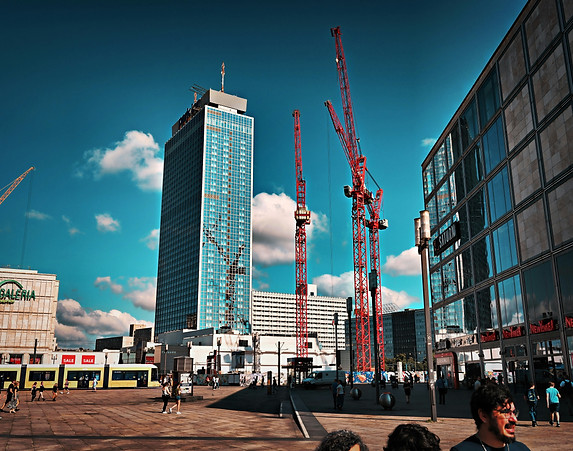
Morning Light at Alexanderplatz
The day began at Alexanderplatz, where history pulses beneath neon and tram tracks. Once the center of East Berlin, this wide-open space is anchored by the towering Fernsehturm — the 368-meter television tower that still defines the skyline.
📸 Photo tip: Try early morning for soft shadows and a cinematic vibe. Frame locals walking across the plaza beneath the tower for scale and rhythm.

💡 Did you know? Built in the late 1960s by the GDR, the Fernsehturm was designed to rival Western symbols. It remains one of the tallest structures in Europe. From the square, I followed the curve of the Spree River, where the glass of modern Berlin meets stone relics of the past.
Museum Island – Stillness and Story
Crossing the bridge to Museum Island, I was struck by the contrast between the neoclassical facades and the slow pulse of the river. The Lustgarten was waking up: a few tourists, morning joggers, and the sound of leaves brushing stone.
📸 Photo tip: Use reflections in puddles or museum windows to double the symmetry. Perfect in black and white.
💡 Did you know? Museum Island is a UNESCO World Heritage Site, home to five world-class museums and thousands of years of human history.
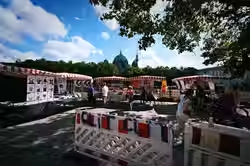
Nearby, I stumbled on a small art market — local makers with tables full of paintings, ceramics, and conversation. Berlin’s artistic energy is never far away.
Elegance at Gendarmenmarkt
A short walk led me to Gendarmenmarkt, one of the most refined squares in the city. With the German and French Cathedrals flanking the stately Konzerthaus, the plaza feels almost too perfect to be real.
📸 Photo tip: Shoot from the arcades on the edge of the square to capture layers and frame the architecture with human activity.
💡 Did you know? The square was first built in the 17th century and rebuilt after World War II, combining grandeur with resilience.

 |
|---|
 |
 |
 |
 |
 |
 |
 |
 |
 |
|
|
 |
 |
 |
 |
|
|


 |  |
|---|---|
 |  |
 |  |
 |
Divided Histories: Checkpoint Charlie
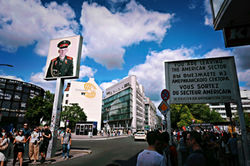
Berlin isn’t just elegance — it’s scars. Checkpoint Charlie, the former border crossing between East and West, is a reminder of how divided this city once was. A replica of the checkpoint booth stands beside uniformed actors and sobering exhibits.

📸 Photo tip: Focus on small contrasts — tourists beside black-and-white wall photos, flags reflected in sunglasses.
💡 Did you know? The real drama often played out just beyond the checkpoint: escape attempts, standoffs, secret deals.
 |  |  |
|---|---|---|
 |  |  |
 |  |  |
 |
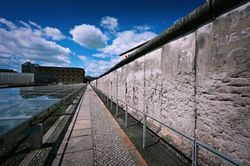
Transformation at Potsdamer Platz
From the Cold War to glass towers: Potsdamer Platz is Berlin’s phoenix. Once a barren zone between walls, now it’s a futuristic junction of steel, screens, and movement.
📸 Photo tip: Use motion blur in long exposures to show energy. Sunset reflects beautifully off the tall buildings.
💡 Did you know? After the Wall fell, this area became Europe’s largest building site.


Memory in Stone: The Holocaust Memorial
Just a few blocks away, a hush falls over the city. The Memorial to the Murdered Jews of Europe spreads out in a field of gray concrete slabs — different in height, equal in impact.
📸 Photo tip: Shoot from low angles. Use shadow to create depth and reflect disorientation.
💡 Did you know? Architect Peter Eisenman designed the space to evoke isolation, disorientation, and memory without a single explanatory plaque.
 |  |
|---|
Icons and Reflection: Brandenburg Gate and Reichstag
I approached the Brandenburg Gate, the ultimate symbol of a reunified Berlin. What once marked division now frames the future.
📸 Photo tip: Capture human interaction — children playing, people posing, or protesters speaking beneath the arches.
Just beyond it stands the Reichstag, with its glass dome reflecting sky and civic transparency. Democracy made visible.
💡 Did you know? You can walk up into the dome and look down into the parliamentary chamber — by design.
 |  |  |
|---|---|---|
 |  |  |
Final Echoes at the Tränenpalast
The day ended at the Tränenpalast — the “Palace of Tears” at Friedrichstraße station, where families once said goodbye through glass and wire. Today, it’s a small but powerful museum that gives voice to those farewells.
📸 Photo tip: Use soft focus on personal items — passports, letters, photos — to evoke emotion.
💡 Did you know? The name wasn’t official. It came from those who wept at the border — and those who weren’t allowed to cross.
 |  |
|---|---|
 |  |
 |  |
 |  |
 |
Final Frame
Berlin is built on layers — of history, of healing, of hope. My walk through Mitte was more than a route; it was a conversation with time. This city doesn’t hide its past — it invites you to witness it, photograph it, and remember.
👉 Scroll down to view my Berlin photo gallery from this walk
📬 Have you walked through Berlin’s history? Share your favorite spot in the comments.
#BerlinInFocus #StreetPhotographyBerlin #HistoryInMotion #MitteWalks #UrbanExplorations