
Brussels, Seen Differently
From the Marolles to the European Quarter
Some cities never look the same twice. Brussels is one of them. After the first day exploring galleries, light, and underground stations, the second day felt different from the start. Slower. More spontaneous. Less about places, more about people.
We started again from the center, but this time we walked in the direction of the Marolles — one of the most authentic and characterful neighborhoods of Brussels.


Towards the Marolles — The Soul of Brussels
The Marolles is not polished Brussels. It’s not the postcard version of the city.
It’s the Brussels of stories, of old cafés, antique shops, graffiti walls, forgotten corners and unexpected encounters.
Walking through these streets feels like walking through a different time. Old facades, small workshops, second-hand stores, people talking on the street, dogs sleeping in doorways — life here happens outside.
This is where street photography feels natural. Nothing is staged, nothing is perfect, and that’s exactly why it works.
We walked slowly, stopping often, sometimes without even taking a photo — just watching, observing, waiting for a moment to happen.
Because in the Marolles, moments always happen.
 |
|---|
 |
 |
 |
Vossenplein — Where Stories Live
And then we arrived at Vossenplein (Place du Jeu de Balle) — the famous daily flea market.
This place is a paradise for street photographers.
Objects everywhere. Old cameras, vinyl records, books, chairs, mirrors, paintings, suitcases… but the real subject is not what’s on the tables — it’s the people around them.
Photo tips for Vossenplein: Focus on interactions between people, not only on objects. Shoot wider to capture the atmosphere. Look for hands, gestures, exchanges of objects and money. Black and white works very well here because of textures and faces. Don’t rush — walk around the market several times. This was definitely one of the highlights of the day.


Collectors searching for treasure.Vendors negotiating prices.Tourists discovering strange objects.Locals just walking through with a coffee in their hand.Every few meters, a new scene appeared. A gesture. A look. A discussion. A laugh. A moment of silence between two strangers looking at the same old photograph.
This is the kind of place where you don’t need to search for photos — photos find you.We spent a long time here. Walking around the market again and again. Sometimes shooting. Sometimes just watching the light, the interactions, the textures of old objects and faces marked by time.If you love street photography, this might be one of the most interesting places in Brussels.
 |  |  |
|---|---|---|
 |  |  |
 |  |  |
 |  |  |
 |  |  |
 |  |  |
 |  |  |
 |  |  |
 |  |  |
 |
 |
|---|
|
 |
 |
 |
 |
 |
 |
 |
 |
 |
 |
 |
 |
 |
 |

From Central Station to the European Quarter
After the Marolles, we slowly walked back towards the center and passed through Brussels Central Station, another interesting place for photography. Stations are always special — people arriving, leaving, waiting, thinking, running, standing still.
Movement and stillness in the same place.
From there, we continued towards the European Quarter. The atmosphere changes completely there. The old Brussels disappears and makes place for modern buildings, glass facades, large squares and wide streets.
It feels more structured, more geometric, more minimalistic — perfect for architecture and urban photography.
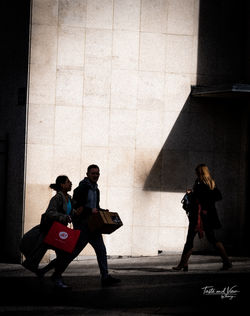
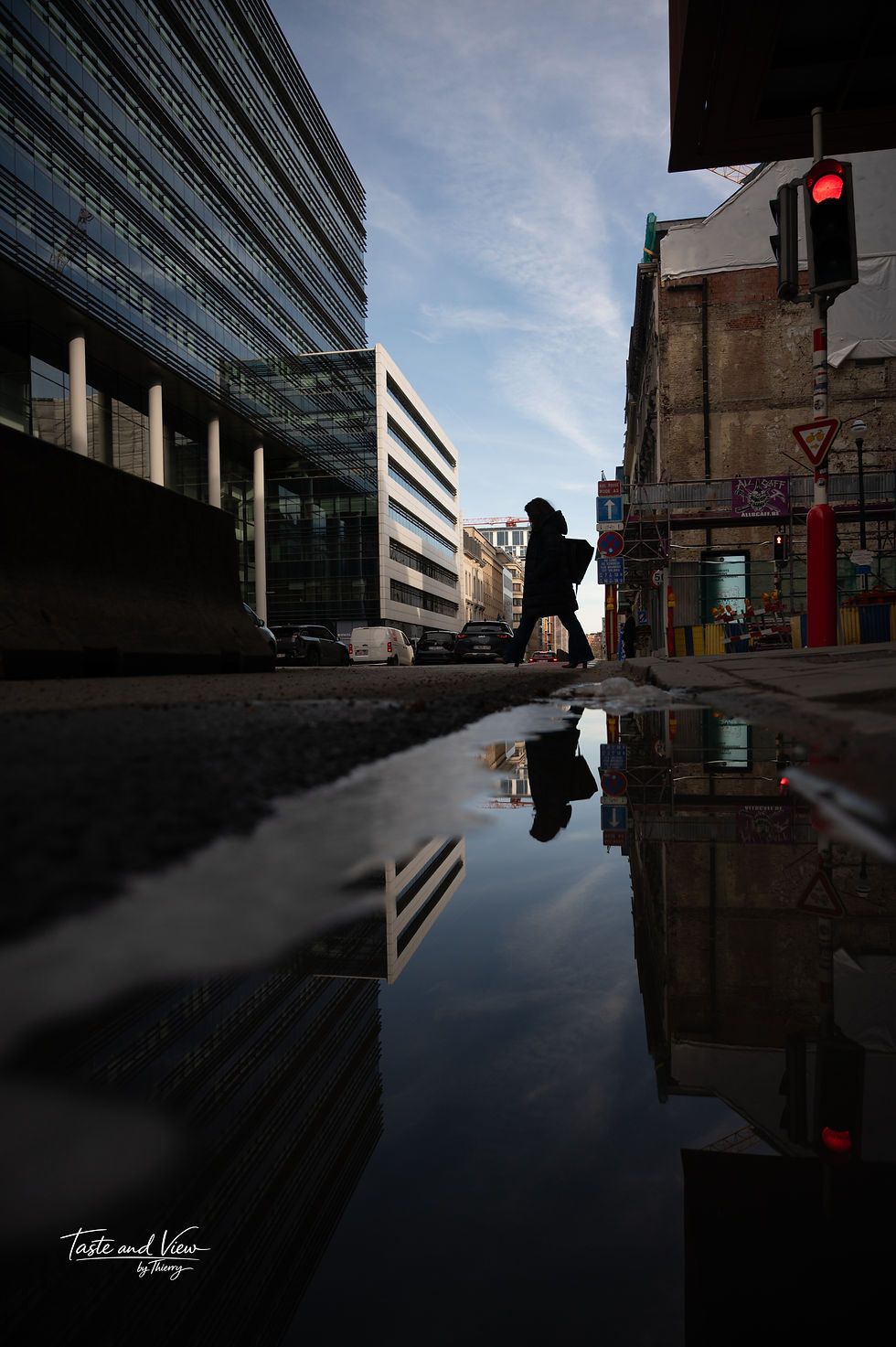
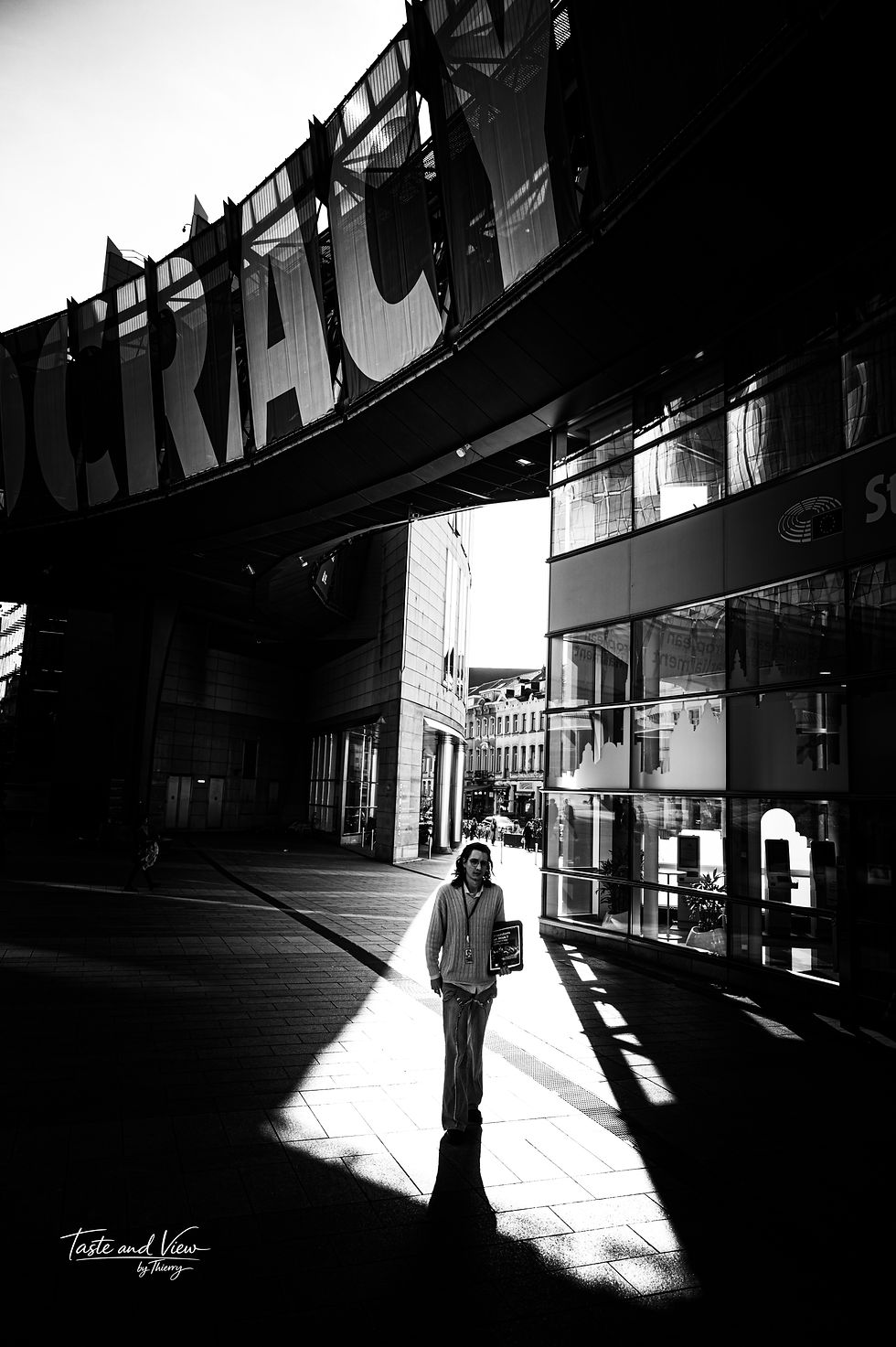
Reflections in glass buildings, silhouettes of people in large open spaces, strong lines and symmetry — a completely different visual language compared to the Marolles, but equally interesting.
Brussels is fascinating because of these contrasts.
Within one day, you can photograph history, street life, modern architecture, underground stations and city views.
Few cities offer so much variety in such a small area.


 |
|---|
 |
 |
 |
 |
 |
 |
 |
 |
|
|---|
|
|
|
 |
 |
 |
 |
 |
 |
|
 |
 |
 |
|
 |
 |
 |
 |
 |






 |  |
|---|---|
 |  |
 |  |
 |  |
 |  |
 |  |
Behind the Finance Tower — Light, Lines and Silence
To end the day, we went to the area behind the Finance Tower.
A place of lines, concrete, glass and light. Less people, less noise — more space to focus on composition and geometry.
Here we played again with shadows, strong contrasts, minimal compositions and architecture. After two days of walking through Brussels, it felt like a calm ending. Slower. More reflective.
Sometimes photography days don’t end with a spectacular location, but with a quiet place where you can still experiment and enjoy the last light of the day.
This was one of those endings.
Two Days in Brussels — More Than Photography
These two days in Brussels were not just about taking photos.
They were about:
-
walking without a real plan
-
looking differently at places you think you know
-
waiting instead of rushing
-
discovering new places
-
and especially sharing photography with someone who inspires you
Exploring Brussels with Ovidiu Selaru made these days special. You learn without realizing it. You start seeing differently. You become more patient. More aware. More curious.
And maybe that’s what street photography is really about.
Not only photographing a city.
But discovering it — step by step, frame by frame.


Brussels is not a city you visit once.
It’s a city you keep rediscovering.
Let’s wander.