Looking Differently, A Day at FUJIKINA Ghent

Photography, inspiration and a few moments that made me stop and look twice.
Some photography days are about coming home with good pictures. Others stay with you because they change the way you look. FUJIKINA Ghent was a bit of both.
A full day surrounded by photography, photographers and people who simply enjoy looking at the world through a camera. Talks, encounters, photo walks and plenty of opportunities to experiment. But above all, it was a day that reminded me of something very simple: photography begins with noticing.
Noticing the light. A gesture. A colour. Someone entering the frame at exactly the right moment. Or something you have probably walked past a hundred times before.
And Gent gave us plenty to look at.
People against the city

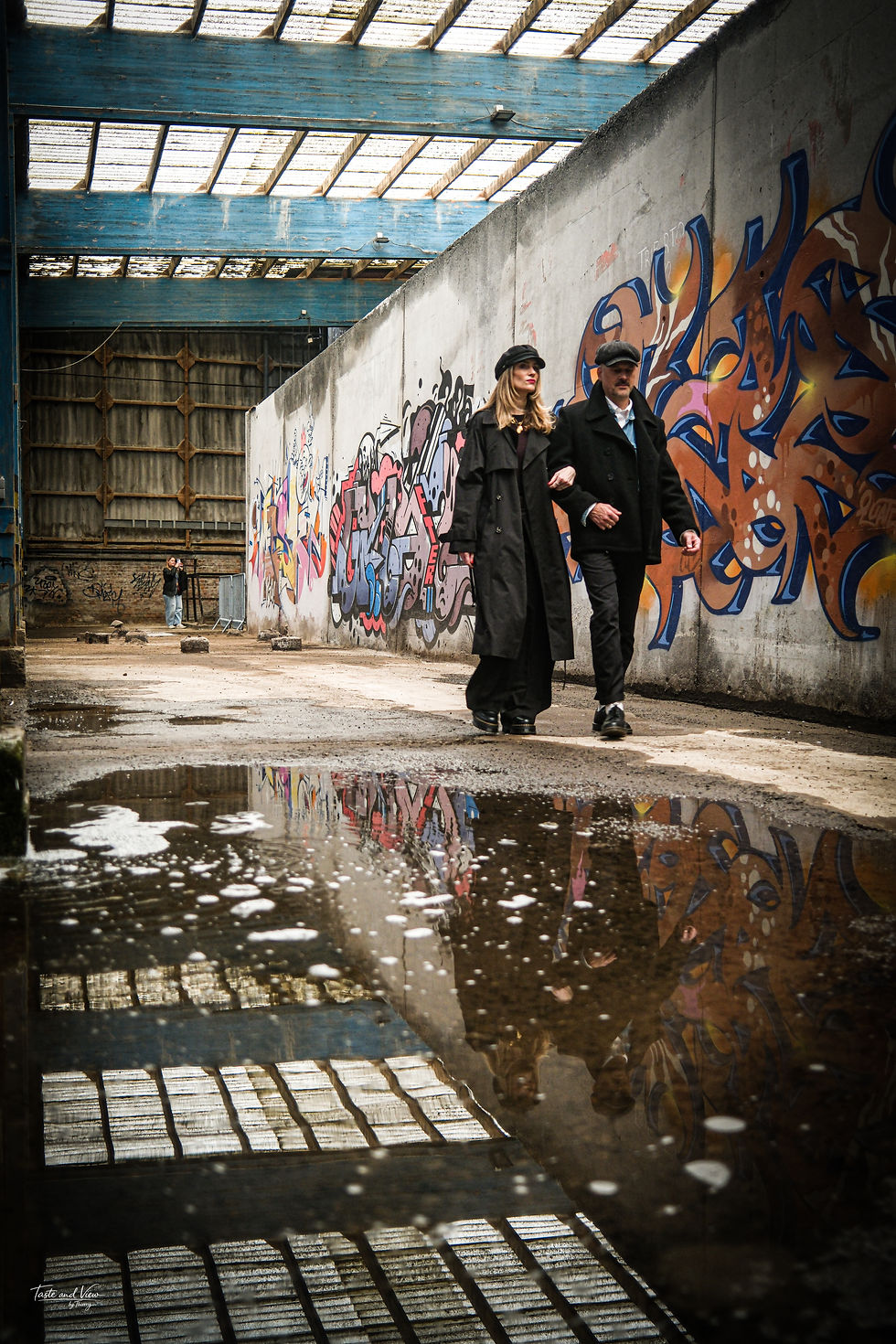
The industrial surroundings immediately created a particular atmosphere. Dark clothing, weathered brick, graffiti and small explosions of colour came together almost naturally.
In this first frame, what attracted me was not only the couple, but also the contrast between their quiet appearance and the rough, almost chaotic wall behind them.
There is something cinematic about it. They seem to belong together, but at the same time both appear lost in their own thoughts. The city becomes more than a background. It becomes part of their story.

Move a little closer and everything changes. The surroundings almost disappear and suddenly it is about glances, distance and connection. One looks towards the camera, the other towards the person beside them.
I like photographs where not everything is explained. You see a moment, but you have to imagine the story around it yourself. For me, that is often where a photograph becomes interesting.

And then there was colour. Lots of it. Against this almost overwhelming graffiti wall, the two dark silhouettes immediately stood out. Their clothing gives the image structure while the wall brings energy and chaos. I deliberately left some distance between them.
Sometimes the empty space between two people can tell as much as the people themselves. That contrast, black against colour, stillness against visual noise became one of my favourite combinations of the day.
Learning to see differently
One of the highlights of FUJIKINA was being able to take part in a photo walk with Cole Roberts. What I appreciated most was not a particular camera setting or technical trick, but the way he approached a scene. Watch first. Photograph later. It sounds simple, but it changes a lot.
Instead of constantly searching for the next picture, you start paying attention to what is already happening around you. You wait a little longer. You move a few metres. You look behind you. And sometimes the photograph suddenly appears.
I had similar moments of inspiration with Loris Durenne and Jeffrey Van Daele. Different photographers, different styles and different ways of looking — but exactly that makes these encounters so valuable. You don’t have to copy someone else’s photography.
You take home a small idea, an observation or a way of thinking and slowly make it your own.

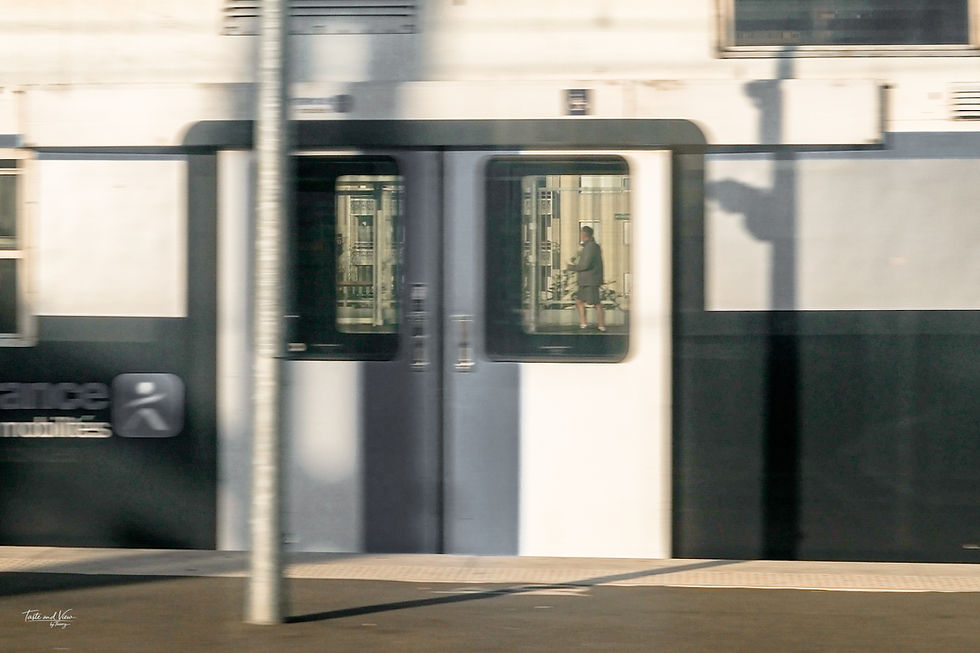
This image is probably one of the clearest examples of that. At first glance, there is almost nothing to photograph. A dark wall. A reflective surface. Graffiti.
And then someone walks through the reflection.
For just a few seconds all those separate elements come together. The photograph becomes layered: reality, reflection, architecture and a human figure passing through it.
A moment that would have disappeared completely if I had walked on a little faster.
Sometimes, however, waiting is not enough. Movement makes the picture.
Here the person walking through the foreground changes an otherwise static portrait completely. The reflection in the water adds another layer and suddenly the frame contains several small stories at once.
The person standing still. The person passing by. The graffiti. And beneath it all, an imperfect reflection repeating part of the scene. These are the moments I increasingly enjoy photographing: scenes that are not completely controlled. You compose, you wait… and then you allow something unexpected to happen.
Beyond the obvious
A photography festival naturally attracts your attention to people. But between the walks, portraits and conversations I also found myself looking at Gent itself.
Lines. Buildings. Water. Small details. Ordinary objects that become interesting once you isolate them from their surroundings.

The contrast between old industrial Gent and the city that grew around it can be seen almost everywhere. Here, a large residential block rises behind the dark roof of an industrial building. Two different rhythms. The repetitive balconies in the background against the much simpler shape in front. And above them, the sky. I like this type of urban photography because nothing spectacular needs to happen. Architecture, light and composition are enough.

A bicycle beside the water is probably one of the most ordinary scenes you can find in a Belgian city. But changing your position changes the photograph. The wheel becomes a frame within the frame, partially hiding the boat and leading the eye towards the water and trees beyond. Photography often works like that. The subject does not necessarily have to be special. The way you choose to look at it can be.
A little bit of magic

FUJIKINA wasn’t only about wandering through industrial surroundings.There were also moments that felt completely different. Soft light, white fabric, movement and a touch of theatre.
After the darker tones of the streets and the industrial location, this almost dreamlike scene felt like entering another world. The background disappears into haze while the white costume catches the light. It is a very different photograph from the street images, but that is exactly what I enjoyed about the day. One camera. One photographer.
Completely different worlds.
Details are photographs too

Not every photograph needs a person. Sometimes shape, colour and symmetry are enough. The ladder disappearing into that almost unnaturally green water immediately caught my eye. Two metal curves, concrete blocks and a small strip of intense colour.
Nothing important is happening. And yet I stopped. Perhaps that is one of the things photography teaches you: to take ordinary things seriously enough to really look at them.
Gent at the water

Eventually my camera found its way back to the wider landscape. Water, vegetation, debris and one enormous industrial crane dominating the horizon. It is not the postcard version of Gent. And that is exactly why I like it. There is beauty here, but also imperfection. Industry beside nature. Bright blue sky above green water. A person walking quietly through a landscape shaped by decades of work and change. For me, these are often the places where a city becomes most interesting. Not necessarily where everything is beautiful, but where different worlds meet.
More than a photography event
Between all those photographs there were the talks. Conversations about photography, creativity, storytelling, cameras and, above all, seeing.
There was plenty to learn from photographers such as Cole Roberts, Loris Durenne and Jeffrey Van Daele, as well as from the many other speakers and photographers present throughout the day. And although an event like FUJIKINA obviously gives you plenty of opportunities to discover cameras and lenses, that was not what I found most valuable.
I went home with something better.
Ideas. To slow down. To wait. To look at the background before looking at the subject. To use reflections. To move closer. To move further away. And occasionally to forget what you normally photograph and simply point the camera at something because it catches your attention.
That is probably the best thing a photography event can do. Not make you want to buy another camera. But make you want to use the one you already have.
Only the first frames
The photographs in this story are only a small selection of what I photographed during FUJIKINA Ghent. There are many more. Some portraits, some urban scenes, some details and probably a few photographs I still need to look at again before deciding what I think of them.
And I like that. Photography does not always end when you press the shutter. Sometimes you discover the photograph afterwards. When you look through the images again.
When one frame suddenly stands out.
When a small detail you hardly noticed at the time becomes the reason you keep returning to an image. So consider these photographs the first chapter rather than the complete story. More from FUJIKINA Ghent will follow.
See you in the next frame.


Comments