Between Stops and Lives: Capturing the Unseen Stories of Brussels Underground

The underground world of Brussels moves in a rhythm all its own. Beneath the city streets, the usual noise and chaos give way to a quieter, more fluid motion. At Yser station, this shift becomes clear. The platform seems frozen in time, bathed in the steady glow of fluorescent lights that stretch across tiled walls. Yet, this stillness is fragile. A figure blurs past, gone before you fully register their presence. Then the train arrives, slicing through the calm and revealing fleeting scenes of life inside: a pair deep in conversation, a woman lost in her screen, silhouettes framed by warm light. These moments exist briefly, caught between stops and lives.
This space between presence and absence, stillness and movement, offers a unique canvas for photography. Urban life underground is distilled to its essentials: light, motion, and human presence in transition. Here, candid moments unfold naturally, unposed but perfectly aligned. They do not demand to be remembered, yet they linger in the mind.
The Quiet Pulse of Yser Station
Yser station is more than a transit point. It is a place where time seems to pause, yet life continues in subtle ways. The fluorescent lights cast a cool, even glow on the geometric patterns of the tiled walls. Empty seats wait patiently, their stillness contrasting with the constant flow of people passing through.
The platform itself feels like a stage set for brief encounters and silent stories. A commuter waits, head bowed, lost in thought. A traveler glances at the arrival board, anticipation flickering in their eyes. These moments are small and easily overlooked, but together they create a quiet pulse beneath the city.

Capturing Movement in Stillness
Photographing underground life requires a different approach than shooting on busy streets. The environment is controlled, the light artificial, and the pace measured. This setting invites photographers to focus on subtle contrasts: the sharp lines of the station architecture against the soft blur of passing figures, the cold light against warm human moments.
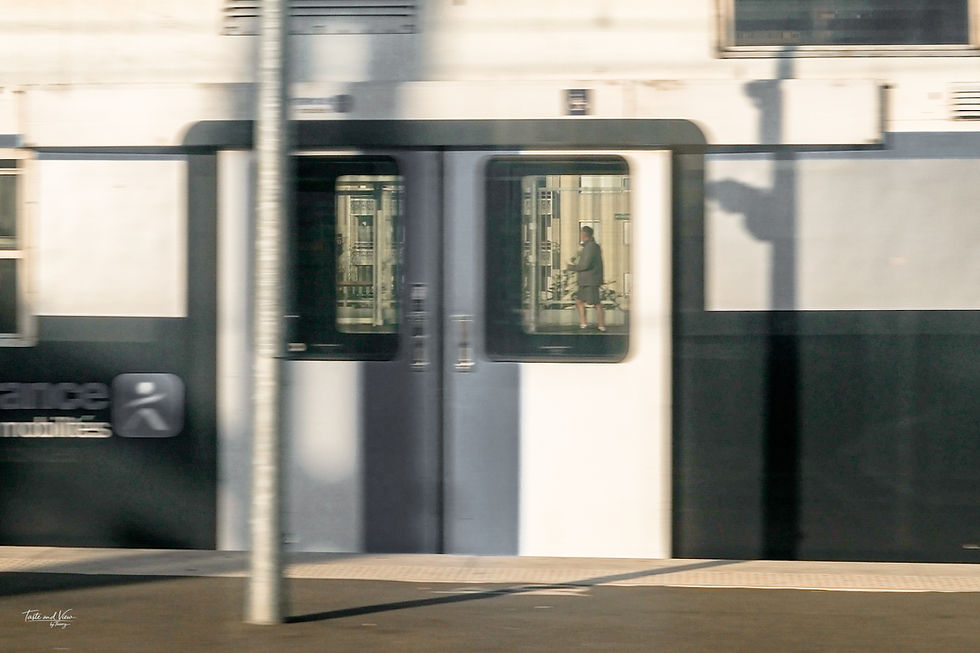
One effective technique is to use slower shutter speeds to capture motion blur. This creates a sense of movement while keeping the background sharp, emphasizing the contrast between the static platform and the fleeting passengers. For example, a train arriving with blurred windows can reveal silhouettes inside, hinting at stories without fully revealing them.
Another approach is to focus on details that often go unnoticed: the worn edges of a bench, the reflection of a single face in a train window, the interplay of shadows on the tiled walls. These elements add depth and texture to the narrative of the underground.
Stories Between Stops
Each train journey is a collection of brief, intimate moments. People exist in a state of transition, never fully here or there. This liminal space is rich with stories waiting to be told.
Consider the scene of two people leaning into conversation, their faces animated but private. Or the solitary figure absorbed in a screen, disconnected from the world around them. These snapshots reveal the human side of urban transit, moments of connection and solitude intertwined.
Photographers who explore these scenes find that the underground offers a unique voice for street photography. The usual distractions of the city fade away, leaving only the essentials: light, motion, and human presence. This stripped-back environment encourages a more restrained, thoughtful style of photography.

Embracing the Unseen
The beauty of underground photography lies in its honesty. Nothing is staged, yet everything aligns perfectly. The fleeting nature of these moments means they often go unnoticed, but they hold a quiet power.
Photographers can embrace this by being patient and observant. Waiting for the right moment when light, motion, and human presence come together naturally. This patience pays off with images that feel authentic and intimate.
For those interested in exploring this style, here are some practical tips:
Use available light: Artificial lighting underground can create interesting shadows and highlights. Avoid flash to keep the natural atmosphere.
Experiment with motion blur: Slow shutter speeds capture movement and add a dynamic element.
Focus on details: Look for textures, reflections, and small gestures that tell a story.
Respect privacy: Capture moments without intruding on personal space or dignity.
Be patient: The best shots often come from waiting and watching.



Comments