Between Lines and Silence

Some cities don’t reveal themselves through monuments or postcard views. They appear in fragments. In reflections behind glass. In footsteps crossing wet streets. In blurred silhouettes that pass each other without ever meeting. These photographs feel less like a guide through Brussels and more like a quiet observation of the spaces between people, architecture and movement.
The first image already sets the tone. Behind the cold horizontal lines of blinds, the city becomes layered and distant. You don’t fully see what’s happening outside, only hints of it. Reflections overlap with reality until both become impossible to separate. It’s a feeling many cities carry today: we are surrounded by thousands of people, yet often experience urban life from behind invisible barriers. Windows, screens, routines, headphones, schedules. The city moves constantly, but everyone seems locked inside their own frame.

That same feeling returns in the soft black-and-white image of the rain-soaked bench. The focus disappears, yet the emotion becomes stronger because of it. The wet lines guide your eyes forward into uncertainty, while the lights in the background dissolve into abstract shapes. It feels cinematic, almost like a memory instead of a photograph. A reminder that street photography is not always about documenting reality sharply. Sometimes blur tells the truth more honestly than detail ever could.
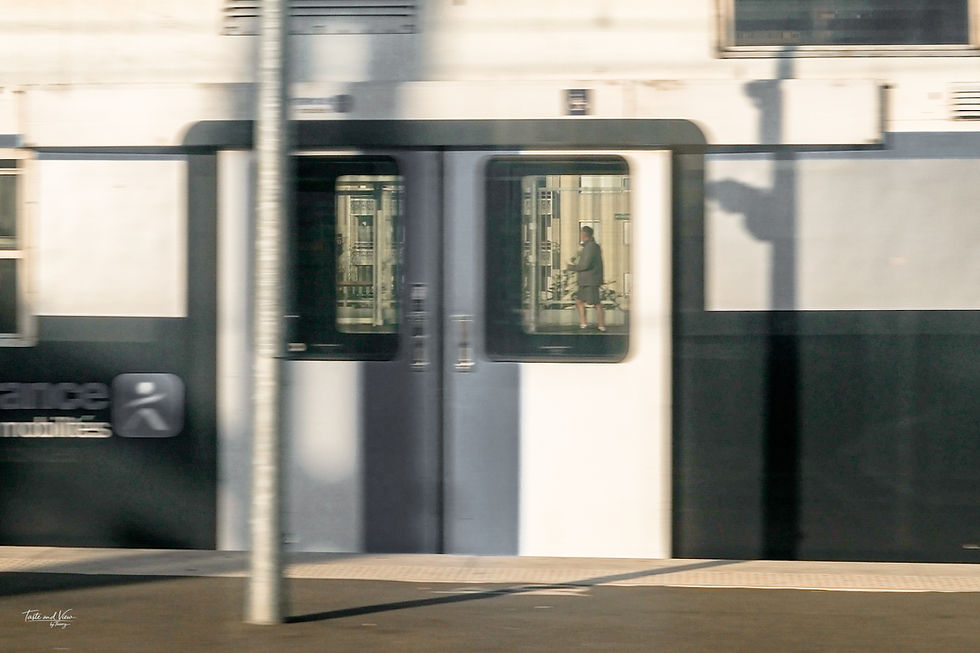
Then comes the station scene, where a single figure crosses an open space surrounded by soft light and fading movement. Nothing dramatic happens here. No grand event. Yet that is exactly the strength of the image. Cities are built on ordinary moments that disappear seconds later. Someone walking home. Someone waiting for a train. Someone lost in thought while thousands move around them. Street photography freezes these invisible seconds before they vanish forever.

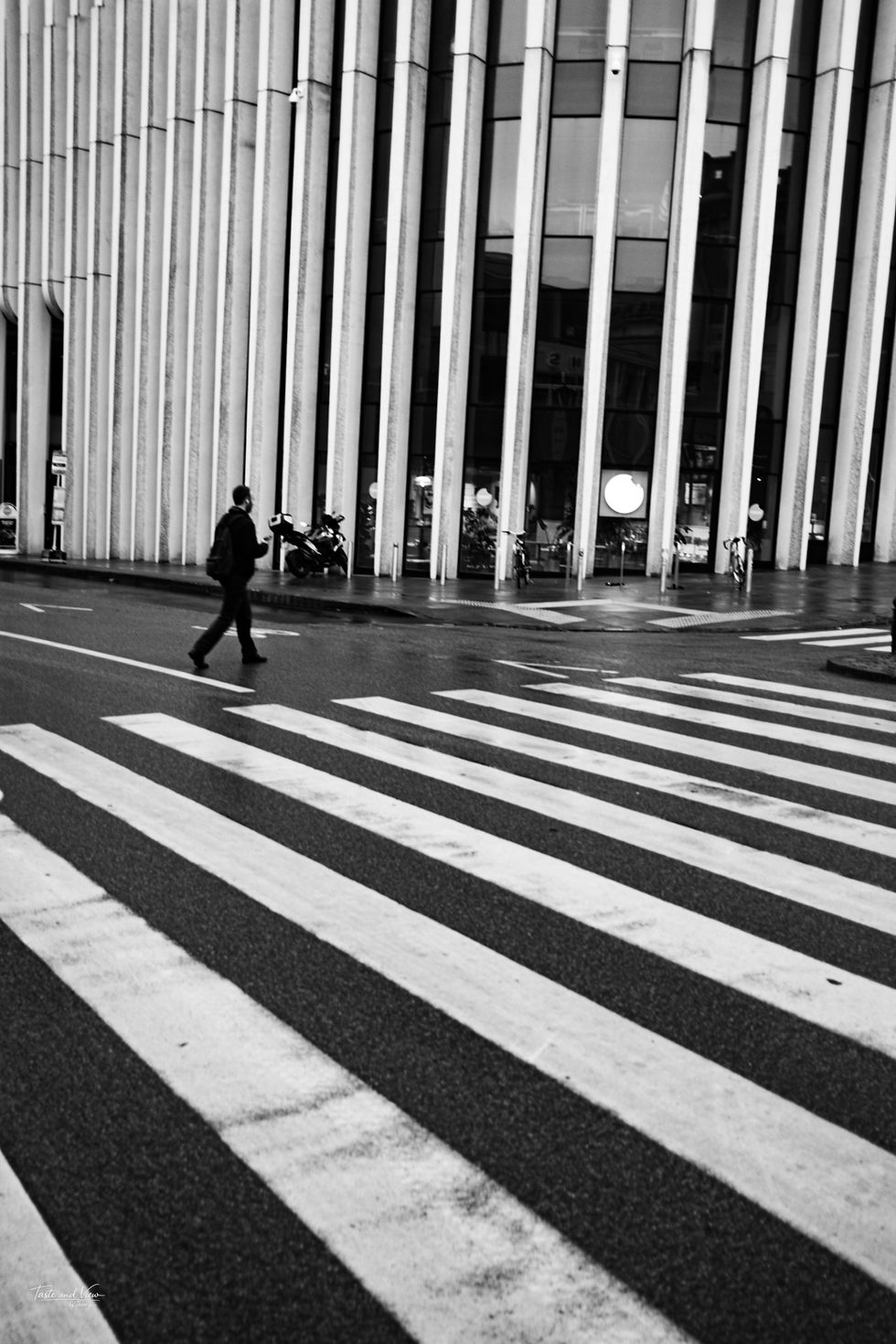
The series around the crosswalks and modern architecture continues this idea beautifully. The repetitive vertical lines of the building almost erase individuality. People crossing the street become temporary interruptions in a larger geometric system. The black-and-white edits strengthen this feeling even more. Shapes, contrasts and rhythm take over from identity. Human beings become part of the architecture itself, absorbed into the visual structure of the city.
And yet, despite the coldness of concrete and steel, there is still humanity everywhere in these frames. The older man stepping carefully across the wet zebra crossing. The woman waiting silently before crossing the road. The backpack, the hood against the rain, the hurried walk toward somewhere unknown. These details ground the images emotionally. They remind us that every anonymous silhouette carries a story no one else fully sees.
What makes this collection particularly strong is the consistent use of perspective. Many images are shot low to the ground, close to reflective surfaces or through obstacles. Instead of observing the city from a safe distance, the camera almost disappears into it. Reflections stretch buildings into abstract forms. Streets become mirrors. Rain transforms ordinary pavement into cinematic scenery. Brussels feels less like a capital city here and more like an emotional landscape shaped by weather, movement and silence.
The final reflections near the old architecture bring everything together perfectly. Historic buildings dissolve into water while dark skies hang above the city. The reflection becomes more important than the object itself. Reality and illusion exchange places. It’s a poetic ending because it captures what this entire series is truly about: not documenting Brussels exactly as it is, but capturing how it feels to move through it.
There’s loneliness in these images, but also calm. Distance, but also beauty. The city never fully explains itself, and perhaps that is why we keep photographing it. Every street corner becomes another unanswered question. Every reflection hides another layer. Every passerby enters the frame for one second before disappearing forever into the rhythm of the city.
These photographs don’t ask the viewer to look harder. They ask the viewer to slow down. And in a city built on movement, that may be the rarest perspective of all.
Let’s View.


Comments